Email Marketing for DTC Brands: The Ultimate Guide to Driving Repeat Revenue in 2026
Sector: Digital Commerce
Author: Nisarg Mehta
Date: 07/01/2026

Introduction
Here’s a number that should make every DTC founder uncomfortable: the average cost to acquire a new customer has increased by over 60% in the last five years. Meta CPMs are up. Google CPCs are up. Influencer rates are up. And conversion rates? Flat to declining for most brands.
The economics of customer acquisition are fundamentally broken for many DTC brands, and the companies still betting their entire growth strategy on paid social are bleeding cash.
Meanwhile, email marketing quietly continues to deliver an average ROI of $36–$42 for every $1 spent, making it one of the highest-returning channels in the entire marketing mix. For DTC brands specifically, email isn’t just a communication tool. It’s a revenue engine, a retention machine, and a direct line to the customers you’ve already spent money to acquire.
In 2026, as third-party data disappears and digital advertising costs spiral, email marketing for DTC brands has become the single most important lever for sustainable, profitable growth. The brands winning right now aren’t the ones spending more on acquisition, they’re the ones extracting maximum value from the customers they already have.
This guide will show you exactly how to do that.
Whether you’re a Shopify merchant just getting started with flows, a retention marketer looking to level up your segmentation, or a CMO rethinking your DTC customer retention strategy from the ground up, this is the most comprehensive, actionable email marketing playbook you’ll find in 2026.
What you’ll learn:
- Why email marketing for eCommerce brands is more critical now than ever
- The complete DTC email marketing framework from acquisition to loyalty
- The 10 essential email flows every DTC brand needs (with sample messaging)
- Advanced segmentation, AI-powered personalization, and 2026 trend forecasting
- The KPIs that actually matter, and how to benchmark them
- The best email marketing tools and email marketing solutions for DTC brands compared side-by-side
Why Email Marketing Matters More Than Ever for DTC Brands in 2026
The landscape has changed dramatically, and most DTC brands haven’t caught up.
The CAC Crisis Is Real
Customer acquisition cost for DTC brands has reached a tipping point. Brands are now spending 3x more on paid acquisition compared to 2019, while LTV:CAC ratios have compressed. The math is simple: if you’re spending $80 to acquire a customer who only buys once and spends $65, you’re building a money-losing business no matter how fast you grow.
The antidote is retention. Increasing customer retention by just 5% can boost profits by 25–95%, according to research from Bain & Company. Email marketing is the most cost-effective retention channel available to DTC brands today, by a significant margin.
Privacy Changes Killed the Third-Party Data Playbook
Apple’s App Tracking Transparency (ATT) framework devastated mobile ad targeting. The deprecation of third-party cookies, now largely complete across major browsers, eliminated the retargeting capabilities that DTC brands relied on for years. Meta’s targeting has degraded meaningfully. The hyper-precise audience segmentation that once made Facebook ads feel like a superpower is a shadow of what it was.
The brands that adapted earliest moved aggressively toward owned channels. Email is the ultimate owned channel, you own the list, you control the message, and no algorithm decides whether your content gets seen. A subscriber who opted into your list is infinitely more valuable than a cookie-based audience you rented from a platform.
First-Party Data Is the New Competitive Moat
In a world without third-party cookies, first-party data, information customers willingly share with you directly, is priceless. Every email address in your list is a first-party data asset. Every purchase, browse behavior, and engagement signal attached to that email address helps you build a richer customer profile than any third-party data provider could offer.
DTC brands that are building robust email lists and investing in email marketing solutions are building durable competitive advantages. Those that aren’t are becoming increasingly dependent on platforms they don’t control, paying ever-increasing rents for access to audiences they never really owned.
Email Delivers Disproportionate Revenue
The data consistently shows that email outperforms nearly every other channel on a cost-per-revenue basis:
- Email marketing ROI: $36–$42 per $1 spent (DMA, 2025)
- Conversion rate: Email converts at 2–5% compared to social media’s 0.5–1%
- Cart abandonment recovery: Automated cart abandonment emails recover 5–15% of abandoned carts
- Revenue attribution: For mature DTC brands, email typically drives 30–40% of total revenue
EXPERT TIP
The brands seeing the highest email ROI in 2026 aren’t just sending more emails, they’re sending smarter ones. Volume without strategy kills deliverability and erodes subscriber trust. Precision beats frequency every time.
What Makes DTC Email Marketing Different From Traditional Email Marketing?
Traditional B2B email marketing is about lead nurturing and sales pipelines. Enterprise email marketing is about account management and renewals. DTC email marketing is a different discipline entirely, and treating it like generic email marketing is one of the most common and costly mistakes brands make.
The Customer Lifecycle Is Central to Everything
DTC email marketing is built around the customer lifecycle. Every email a subscriber receives should map to where they are in their journey with your brand, from first discovery to loyal advocate. A new subscriber who just joined your list after seeing a TikTok ad needs a very different experience than a customer who has purchased four times in the last year. Sending both of them the same weekly newsletter is a waste of potential.
Personalization Is Expected, Not Optional
DTC consumers expect personalization. A generic blast email that treats every customer identically feels lazy, impersonal, and increasingly gets ignored. Real personalization in DTC email marketing goes beyond putting someone’s first name in the subject line. It means recommending products based on purchase history, sending replenishment reminders at the right moment, and creating VIP experiences for your highest-value customers. This is where personalized email marketing becomes a genuine competitive advantage.
It’s Data-Driven at Every Level
Great DTC email marketing is built on behavioral data, what customers browse, what they buy, how often they purchase, which products they engage with, when they tend to open emails, and what content resonates with them. Every decision, from segmentation to send time to subject line, should be informed by data, not gut instinct.
Email Doesn’t Live in a Silo
For DTC brands, email works best when it’s integrated with SMS, paid social, push notifications, and loyalty programs. A customer who abandons a cart might get an email, then an SMS. A VIP customer might get an exclusive email offer and then see a retargeted ad reinforcing the same message. Omnichannel integration amplifies the impact of every individual channel.

The Complete DTC Email Marketing Framework
Before you can run sophisticated email flows, you need a solid foundation. Here’s the complete framework every DTC brand should build before optimizing for scale.
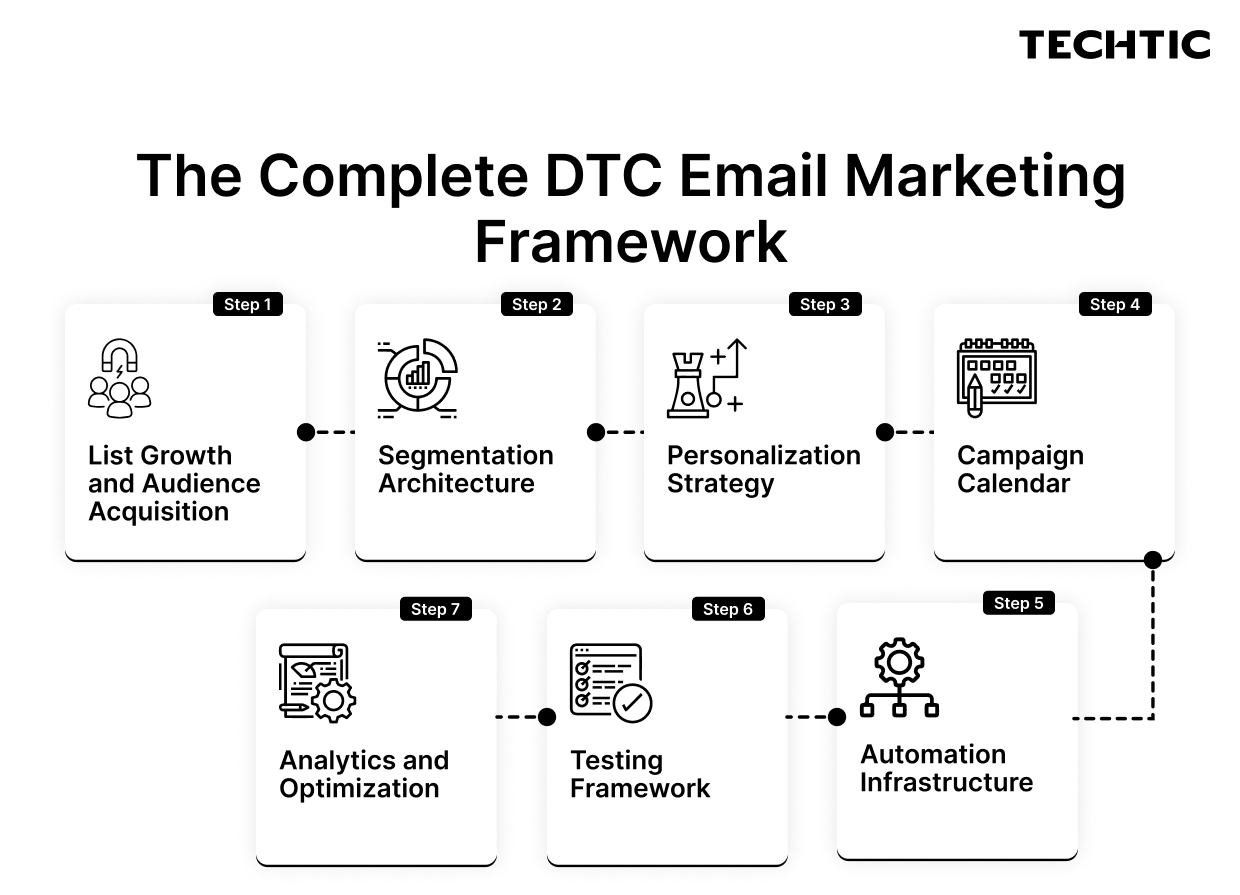
Step 1: List Growth and Audience Acquisition
Your email program is only as strong as your list quality. Focus on:
- Pop-ups and on-site capture forms – Exit-intent pop-ups, scroll-triggered forms, and embedded sign-up sections are the workhorses of DTC list building. A 10–15% off first-order offer converts best for most DTC categories.
- Gated content and quizzes – Product recommendation quizzes and buying guides can capture email addresses while collecting zero-party data about preferences.
- Checkout and post-purchase capture – Ensure your checkout flow captures marketing opt-ins at the point of purchase.
- Social and paid acquisition – Use lead generation campaigns on Meta and TikTok to drive email sign-ups. The cost per subscriber is almost always lower than cost per customer.
Step 2: Segmentation Architecture
Before you send a single email, define your segmentation structure:
- Engagement tiers: Active (opened in 90 days), Lapsed (90–180 days), At-Risk (180+ days)
- Lifecycle stages: Subscriber, First-time buyer, Repeat buyer, VIP, Churned customer
- Purchase behavior: Category preferences, average order value, purchase frequency
- Product affinity: Which product lines a customer gravitates toward
Step 3: Personalization Strategy
Decide what data you’ll use to personalize, and map personalization to each segment. At minimum, personalize: product recommendations, subject lines with contextual relevance, send times based on individual open patterns, and offers based on customer tier.
Step 4: Automation Infrastructure
Build your core automated flows before investing in campaigns. Automation is the foundation; campaigns are amplification. The 10 essential flows are detailed in the next section.
Step 5: Campaign Calendar
Layer campaign emails on top of your automation infrastructure: seasonal campaigns, new product launches, content-led campaigns, loyalty and referral campaigns, and re-engagement campaigns.
Step 6: Testing Framework
Build a structured testing program from day one. Test one variable at a time (subject line, CTA, layout, send time). Ensure statistical significance before declaring winners, minimum 1,000 recipients per variant.
Step 7: Analytics and Optimization
Review performance weekly at the campaign level and monthly at the program level. Which segments are driving the most revenue? Which flows have the highest and lowest performance? Where are subscribers dropping off in multi-step flows?
KEY TAKEAWAY
The most successful DTC email programs are built systematically, foundation first, optimization second. Trying to run sophisticated personalization without solid segmentation and clean data is like trying to run before you can walk.
10 Essential Email Flows Every DTC Brand Needs
Automated flows are the backbone of DTC email marketing. They run 24/7, respond to customer behavior in real time, and generate revenue while you sleep. Here are the 10 flows every DTC brand needs.
FLOW 1: Welcome Series
Flow Overview
Purpose: Introduce new subscribers, build trust, and convert first-time buyers
Trigger: New email subscriber (purchased or non-purchased)
Length: 4 emails over 5–7 days
Revenue Impact: Consistently the highest-revenue automated flow for DTC brands
Email 1 (Immediate): Deliver your incentive, don’t make people wait. Include a warm brand introduction alongside the offer code.
Email 2 (24 hours): Tell your brand story, why you exist, what you stand for, what makes you different. This is where brand affinity gets built.
Email 3 (3 days): Showcase bestsellers, social proof, and UGC. Let happy customers do the selling.
Email 4 (5–7 days, non-purchasers only): Create urgency around the incentive expiring. One last compelling reason to take action.
Sample Email 1 Subject Line: “Your 15% off is here-plus, the story behind [Brand]”
EXPERT TIP
Welcome series are consistently the highest-revenue flows for DTC brands. Invest disproportionately in their design, copy, and testing before building other flows.
FLOW 2: Browse Abandonment
Flow Overview
Purpose: Re-engage subscribers who viewed a product but didn’t add to cart
Trigger: Product page viewed, session ended without add-to-cart (1–4 hour delay)
Length: 2 emails over 24 hours
Best Practice: Show the specific product with reviews; use social proof to overcome hesitation
Sample Subject Line: “You were checking out [Product Name]”
FLOW 3: Cart Abandonment
Flow Overview
Purpose: Recover customers who added items to cart but didn’t checkout
Trigger: Item added to cart, session ends without checkout
Length: 3 emails over 72 hours
Revenue: Typically recovers 5–15% of abandoned carts
Email 1 (1 hour): Conversational and helpful, “Did something go wrong?” Not salesy. Show the exact cart contents with images.
Email 2 (24 hours): Reinforce value proposition and social proof. Why are others buying this?
Email 3 (72 hours): Introduce a small incentive (free shipping, 10% off) for high-value carts if needed.
Sample Email 1 Subject Line: “You left something behind…”
FLOW 4: Checkout Abandonment
Flow Overview
Purpose: Recover customers who reached checkout but didn’t complete
Trigger: Checkout initiated, not completed within 30–60 minutes
Length: 3 emails over 3 days
Priority: HIGHEST, checkout abandoners have the highest purchase intent of any segment
Move quickly and be direct. Address potential friction points, payment issues, shipping concerns. Make it as easy as possible to complete with a direct link back to checkout.
Sample Subject Line: “Your order is almost complete – finish in 2 clicks”
FLOW 5: First Purchase Flow
Flow Overview
Purpose: Deliver excellent post-buy experience and set the stage for a second purchase
Trigger: First purchase completed
Length: 4 emails over 14–21 days
Key Insight: First order confirmation is the most-opened email you’ll ever send, make it count
Use this series to educate customers on how to get maximum value from their purchase. Ask for a review only after delivery with enough time to experience the product. Introduce complementary products naturally.
FLOW 6: Post-Purchase Flow for Repeat Buyers
Flow Overview
Purpose: Reward repeat customers, deepen loyalty, and encourage additional purchases
Trigger: Second or subsequent purchase
Length: 3 emails over 30 days
Key Insight: Repeat customers should feel recognized, acknowledge their loyalty explicitly
If you have a loyalty program, this is the moment to highlight it. Cross-sell should feel like a personalized recommendation, not a generic upsell.
FLOW 7: Cross-Sell Flow
Flow Overview
Purpose: Introduce customers to products adjacent to their purchase history
Trigger: 14–30 days after purchase (varies by category)
Length: 2 emails over 7 days
Best Practice: “Customers who bought X also love Y” framing converts well
Use purchase data to recommend genuinely complementary products. Don’t cross-sell too early, wait until the customer has experienced their first purchase.
FLOW 8: Replenishment Flow
Flow Overview
Purpose: Remind customers to repurchase consumable or regularly replaced products
Trigger: Calculated based on average days-to-repurchase for specific product categories
Best For: Skincare, supplements, coffee, pet food, cleaning products
Best Practice: Make reordering frictionless, single-click reorder links where possible
Sample Subject Line: “Running low on [Product]? It’s time to restock.”
FLOW 9: Win-Back Flow
Flow Overview
Purpose: Re-engage customers who haven’t purchased in a defined period
Trigger: No purchase in 90, 120, or 180 days (depends on category)
Length: 4 emails over 3 weeks
Dual Purpose: Win them back OR clean your list of genuinely disengaged subscribers
Email 1: Empathetic reconnect, don’t lead with an offer. Acknowledge the gap and show what’s new.
Email 2: Showcase new products, improvements, or brand news that might re-spark interest.
Email 3: Offer or incentive. Reserve discounts for here, don’t train customers to wait.
Email 4: “Last chance” or permission to unsubscribe. Serves dual purpose.
Sample Email 1 Subject Line: “We miss you, and a lot has changed.”
FLOW 10: VIP and Loyalty Emails
Flow Overview
Purpose: Reward and retain your highest-value customers with exclusive experiences
Trigger: Customer reaches VIP threshold (typically top 10–20% by LTV)
Key Principle: Exclusive doesn’t always mean discount, early access can be more powerful
Advocacy Value: VIP customers become brand advocates when treated right
Involve VIPs in product development through surveys and feedback requests. They feel invested in the brand’s success. Early access to new launches, members-only sales, and behind-the-scenes content all drive the emotional connection that makes champions stay.
KEY TAKEAWAY
The average DTC brand leaves significant revenue on the table by running only cart abandonment and welcome flows. Implementing all 10 flows typically increases email-attributed revenue by 40–60%.
Advanced Segmentation Strategies for DTC Brands
Basic segmentation is table stakes in 2026. Sophisticated DTC brands are building multi-dimensional segmentation models that dramatically improve relevance and conversion rates.
Behavioral Segmentation
- Product category affinity: Customers who consistently buy from one category vs. cross-category shoppers
- Promotional responsiveness: Customers who only buy on sale vs. full-price buyers, never send the same discount to both groups
- Content engagement: Subscribers who engage with educational content vs. those who only click product links
Purchase Frequency Segmentation
- One-time buyers (1 purchase, no repeat) — focus of re-engagement campaigns
- Multi-buyers (2–3 purchases) — building loyalty and habit
- Loyalists (4+ purchases) — retention and advocacy programs
- Champions (high frequency + high AOV) — VIP treatment, early access, co-creation
RFM Segmentation: The Gold Standard
RFM is the gold standard for DTC email segmentation. Score each customer across three dimensions:
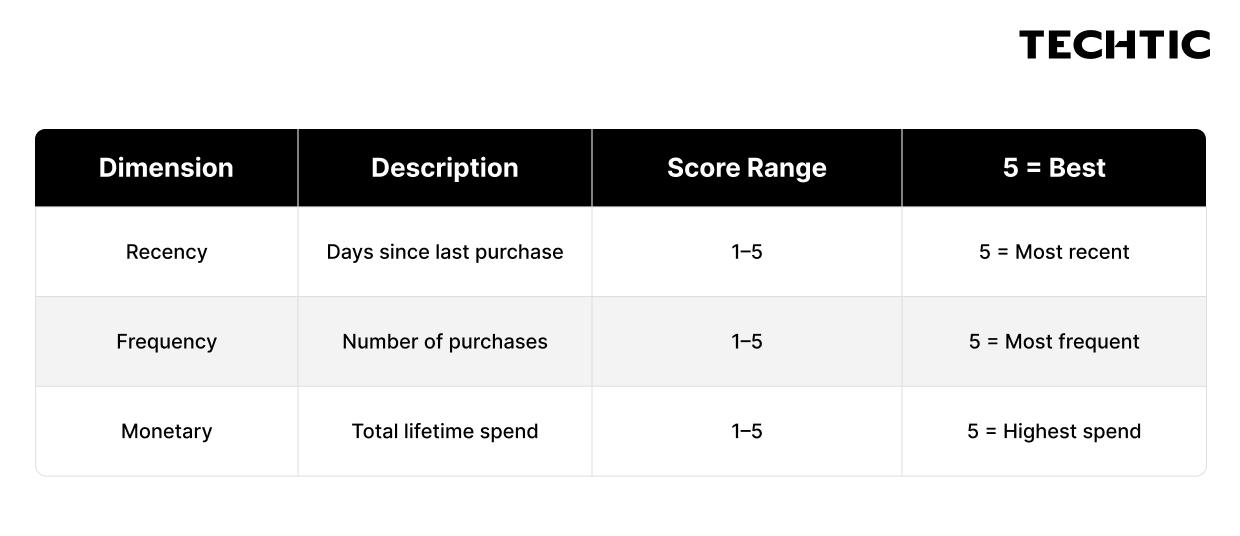
Customers scoring 555 are your Champions. Customers scoring 111 are your lost causes. Most of your revenue leverage lies in moving customers up one tier at a time.
Predictive Segmentation
AI-powered predictive segmentation uses historical data to predict:
- Churn probability: Which customers are likely to stop buying in the next 90 days
- Next purchase timing: When a customer is likely to buy again
- Product affinity: What product a customer is most likely to buy next
- LTV potential: How valuable a customer is likely to be over their lifetime
EXPERT TIP
Start with RFM segmentation before investing in predictive models. A clean RFM model alone can improve email relevance dramatically and is actionable for brands of any size. Build complexity on a solid foundation.
How AI Is Transforming Email Marketing for DTC Brands
AI is no longer a buzzword in email marketing, it’s a functional capability that forward-thinking DTC brands are deploying at scale to improve personalization, predict behavior, and automate decisions that once required manual analysis.
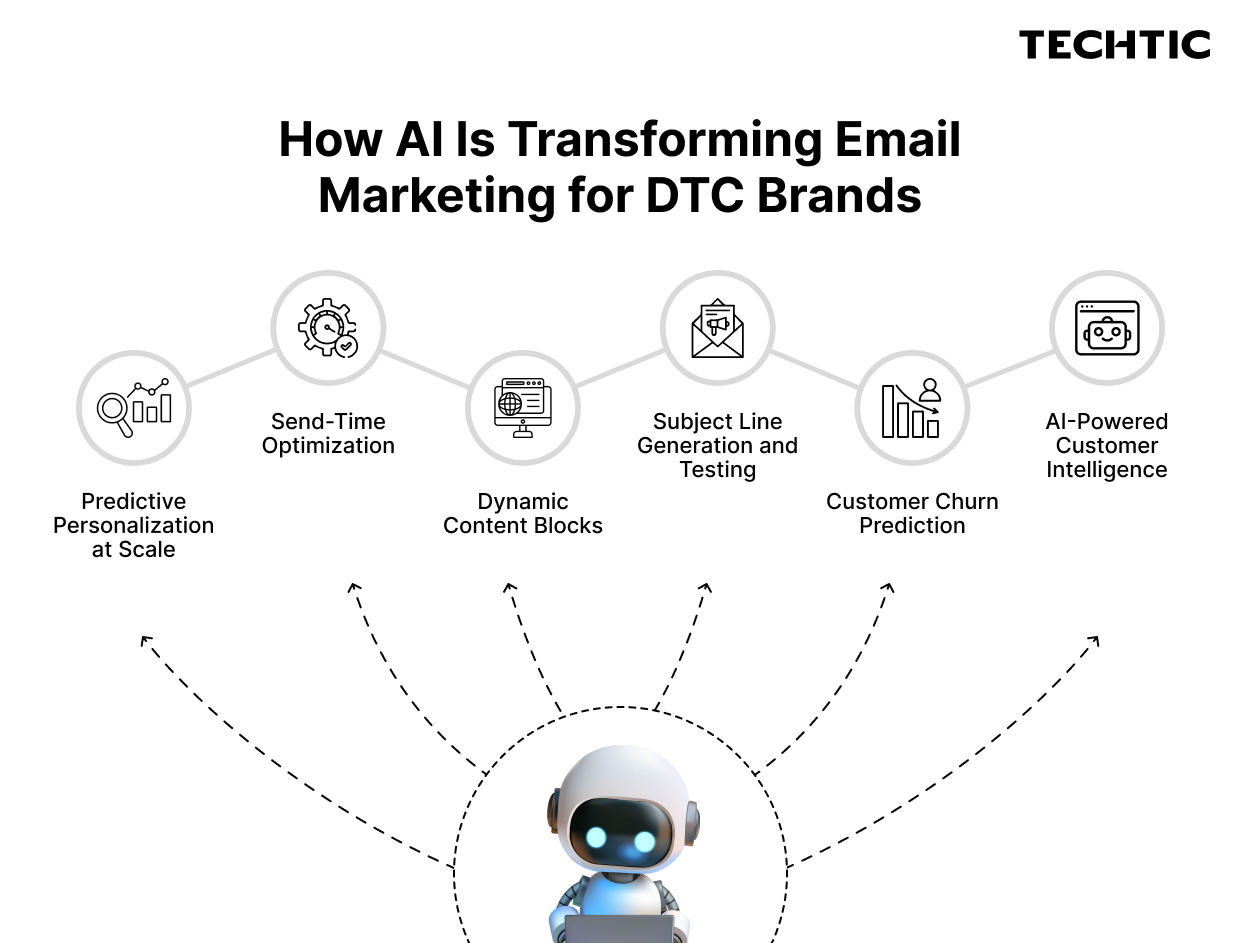
Predictive Personalization at Scale
Traditional personalization relies on what customers have already done. AI-powered predictive personalization anticipates what they’ll do next. By analyzing behavioral signals, purchase patterns, and aggregate data from similar customers, AI engines can surface the right product recommendation for each individual subscriber, not just the brand’s bestsellers, but the specific product most likely to resonate with that particular person.
For DTC brands with large catalogs, this is transformative. A skincare brand with 50+ SKUs can’t manually curate recommendations for each customer segment, but an AI recommendation engine can serve truly individualized product discovery at scale.
Send-Time Optimization
One of the most overlooked quick wins in email marketing is send-time optimization. Research shows that email open rates vary by as much as 25% based purely on timing. AI-powered send-time optimization analyzes each subscriber’s historical open patterns and sends emails at the individual-optimal moment, not a one-size-fits-all “Tuesday at 10am.”
Dynamic Content Blocks
AI enables email templates that render differently for every recipient. A single campaign template might show different hero products based on category affinity, different discount amounts based on customer tier, different subject lines based on predictive engagement scoring, and different CTAs based on lifecycle stage.
Subject Line Generation and Testing
AI-powered subject line generation tools analyze what language, emotional triggers, and formats drive opens for your specific audience, then generate and test subject lines optimized for your subscribers. Brands using AI-assisted subject line testing are seeing 15–25% improvements in open rates.
Customer Churn Prediction
Perhaps the most powerful AI application for DTC retention is churn prediction. By analyzing engagement signals, declining open rates, longer intervals between purchases, reduced browse activity, AI models can identify at-risk customers 30–60 days before they actually churn. This window is critical; it gives brands time to deploy targeted win-back campaigns before the customer is lost.
AI-Powered Customer Intelligence
The most sophisticated DTC brands are using AI to generate actionable intelligence: identifying emerging purchase patterns, surfacing customer segments growing in value vs. declining, predicting seasonal demand spikes at the individual level, and optimizing incentive amounts to maximize margin while maintaining conversion.
EXPERT TIP
When evaluating an email marketing agency or email marketing solution in 2026, ask specifically about their AI capabilities. Not all platforms implement AI equally, the difference between surface-level AI features and genuinely predictive intelligence is significant for your business outcomes.
Personalization Strategies That Increase Repeat Revenue
Personalization is the single biggest lever for increasing repeat purchase rates in DTC email marketing. Here’s how to implement it across your program.
Product Recommendations
- “Customers also bought”: Collaborative filtering based on what buyers with similar histories purchased
- “Complete the routine/look/set”: Complementary products that pair with a previous purchase
- “Based on your last purchase”: Direct extension of known preference
- “New arrivals you’ll love”: New products filtered by category affinity
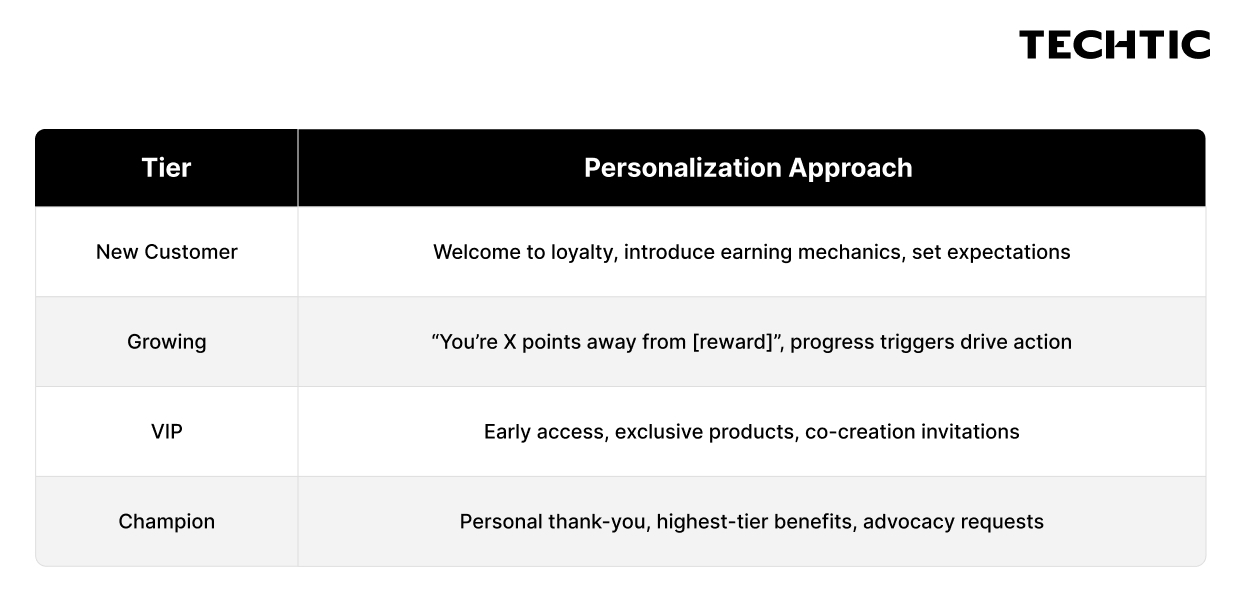
Loyalty-Based Campaign Personalization
Segment your loyalty program communications to reflect where each customer sits:
Behavioral Targeting
- Browse 3+ times without buying: Personalized “still thinking about this?” email
- Third purchase in a category: Category-specific campaign with depth
- Successful referral: Referral success email with enhanced VIP treatment
Personalized Offers and Promotions
Not every customer needs the same discount to convert. AI-powered offer optimization can determine which customers will convert without any discount (full-price buyers), which customers need free shipping vs. a percentage discount, and the minimum discount required to trigger a conversion for price-sensitive segments. This approach protects margin while maintaining conversion rates.
Email Marketing KPIs Every DTC Brand Must Track
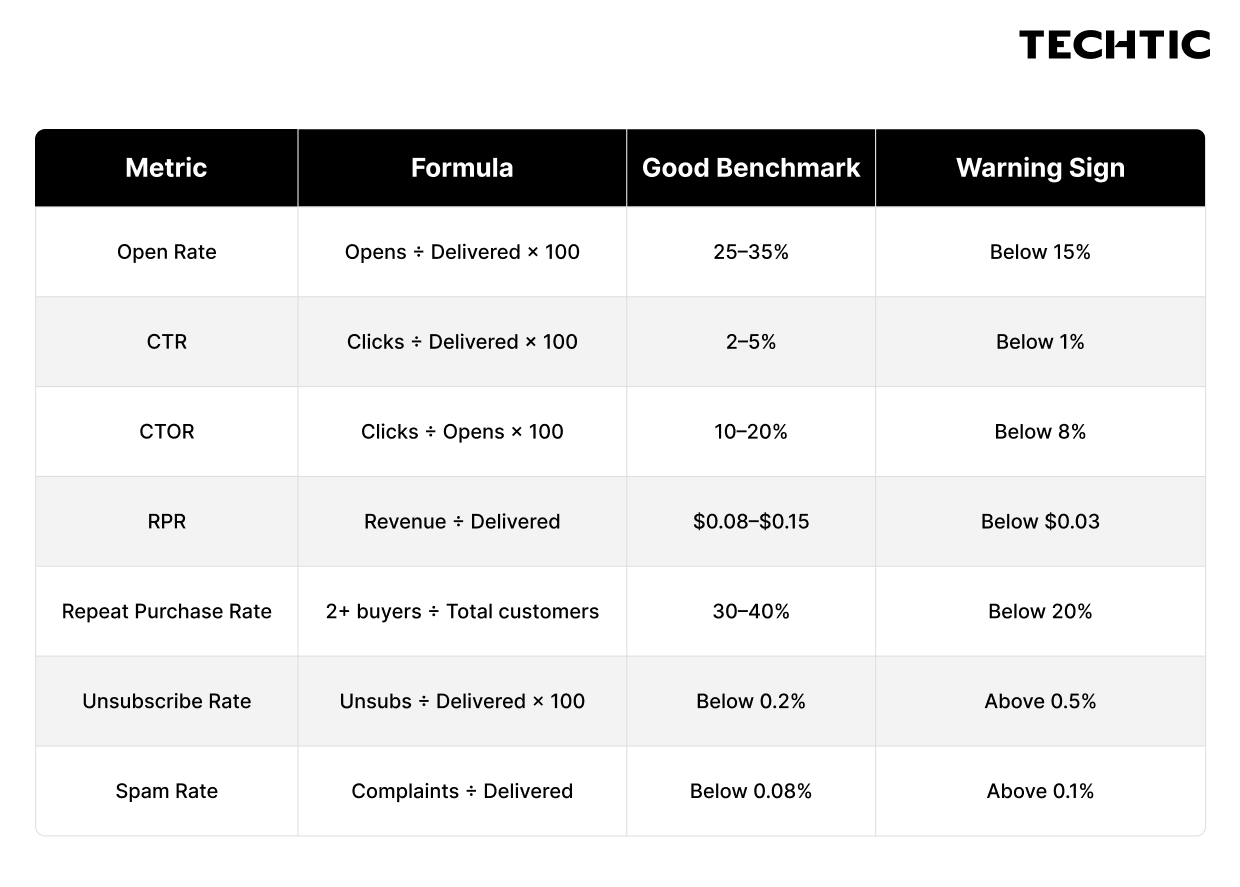
Measuring the right metrics is critical to improving your email program. Here are the KPIs that matter, with formulas and 2026 benchmarks.
Core Engagement Metrics
Open Rate: (Emails Opened ÷ Emails Delivered) × 100 | DTC Benchmark: 20–35%
Click-Through Rate (CTR): (Unique Clicks ÷ Emails Delivered) × 100 | DTC Benchmark: 2–5% campaigns; 3–8% flows
Click-to-Open Rate (CTOR): (Unique Clicks ÷ Unique Opens) × 100 | DTC Benchmark: 10–20%. This measures email body quality independent of subject line.
Revenue Metrics
Revenue Per Recipient (RPR): Total Email Revenue ÷ Number of Emails Delivered | Benchmark: $0.08–$0.15 campaigns; $0.20–$0.80 flows
Email-Attributed Revenue: Benchmark: 25–40% of total revenue for mature DTC brands
Retention Metrics
Repeat Purchase Rate: (Customers With 2+ Purchases ÷ Total Customers) × 100 | Benchmark: 25–35% year one; 40–50% mature brands
Customer Lifetime Value (CLV): Average Order Value × Purchase Frequency × Customer Lifespan
List Health Metrics
Unsubscribe Rate: Benchmark: Below 0.2% per send. Consistently above 0.5% signals a content relevance or frequency problem.
Spam Complaint Rate: Benchmark: Below 0.08% (Gmail’s threshold for sender reputation damage).
Full KPI benchmark reference:
EXPERT TIP
With Apple Mail Privacy Protection distorting open rates, shift your primary success metric to RPR and CTOR. These are harder to inflate and more directly tied to business outcomes.
Common Email Marketing Mistakes DTC Brands Make
Even experienced teams make these mistakes. Here’s what to watch out for and how to course-correct.
1. Over-Emailing Without Segmentation
Sending the same high-frequency email cadence to your entire list is a fast track to deliverability problems and subscriber fatigue. Fix: Create frequency segments. Active, highly engaged subscribers can receive more campaigns. At-risk and lapsed subscribers need a gentler approach.
2. Under-Segmenting
Treating 5,000 customers as one audience is leaving revenue on the table. The difference in conversion rate between a targeted, segmented email and a generic blast can be 2–3x. Fix: Start with purchase history, lifecycle stage, and engagement tier before building more sophisticated models.
3. Generic Messaging That Doesn’t Reflect the Brand
Many DTC brands invest heavily in brand identity on their website and social channels, then send emails that feel like they were written by committee. Fix: Your email copy should sound like your brand. Whether bold and irreverent, warm and community-driven, or clinical and expert-led, that voice needs to translate to the inbox.
4. Neglecting Mobile Optimization
Over 60% of DTC emails are now opened on mobile. Fix: Design mobile-first. Use single-column layouts, large tap targets (minimum 44×44px for CTAs), short subject lines (under 40 characters), and preview text that adds context.
5. Poor Automation Maintenance
Email flows set up two years ago may be recommending discontinued products or referencing outdated promotions. Fix: Audit your flows quarterly. Review product feeds, offers, copy, and timing benchmarks with fresh data every 90 days.
6. No Testing Culture
Too many DTC teams run email programs based on best guesses and legacy assumptions. Fix: Commit to testing one element per campaign. Over a year, you’ll generate meaningful data about what works for your specific audience.
7. Ignoring Deliverability
Poor list hygiene, high complaint rates, and over-emailing unengaged subscribers all damage sender reputation. Fix: Clean your list quarterly. Remove or suppress subscribers who haven’t engaged in 180+ days. Monitor your sender reputation via Google Postmaster Tools.
Email Marketing Trends for DTC Brands in 2026
The email marketing landscape is evolving faster than ever. Here are the most significant trends shaping DTC email marketing strategy this year.
AI-Driven Personalization at the Individual Level
The shift from segment-level to individual-level personalization is accelerating. In 2026, leading DTC brands are serving different email experiences to each subscriber based on real-time behavioral signals, predictive models, and AI-curated content. This is happening now with tools accessible to mid-market brands.
Zero-Party Data Collection
As third-party data disappears, zero-party data, information customers voluntarily share, is becoming a cornerstone of email personalization. Quizzes, preference centers, and interactive surveys embedded in the signup flow help brands build rich customer profiles from day one. Brands collecting meaningful zero-party data in their welcome series are seeing 15–25% better email performance.
Interactive Emails and AMP for Email
Interactive email elements, polls, carousels, add-to-cart buttons, countdown timers, keep subscribers engaged within the email itself. AMP for Email (supported by Gmail, Yahoo Mail, and others) allows customers to browse products and complete actions without leaving the inbox. Brands experimenting with interactive email are seeing significantly higher engagement.
Hyper-Segmentation and Micro-Cohorts
Broad demographic segmentation is giving way to hyper-segmentation based on behavioral micro-cohorts. Instead of “women aged 25–34,” leading DTC brands are targeting “repeat buyers who purchase during evening hours, have a preference for bestseller bundles, and responded to a win-back incentive 60 days ago.”
Predictive Retention Modeling
Proactive retention, identifying and engaging at-risk customers before they churn, is becoming standard capability. AI-powered churn prediction built into platforms like Klaviyo means even smaller DTC brands can run sophisticated retention programs previously only accessible to enterprise teams.
Omnichannel Email Orchestration
Email is increasingly one node in an interconnected customer communication ecosystem. The top DTC brands in 2026 are orchestrating customer journeys across email, SMS, push notifications, direct mail, and paid social, with each channel amplifying the others based on individual customer behavior and preferences.
Best Email Marketing Tools for DTC Brands
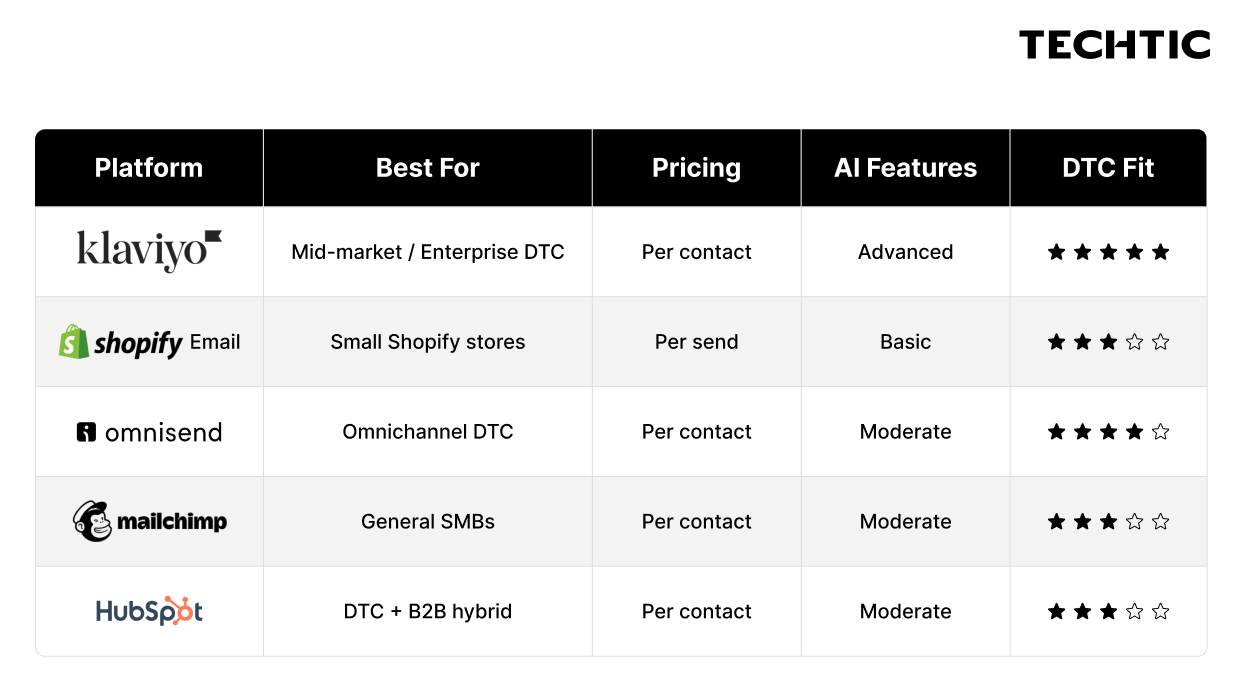
Choosing the right email marketing solution is a foundational decision for any DTC brand. Here’s how the major platforms compare.
Klaviyo - Best Overall for DTC
Klaviyo has become the de facto standard email marketing solution for serious DTC brands. Its deep eCommerce integrations, sophisticated segmentation, predictive analytics, and robust automation capabilities are purpose-built for retention marketing. If you’re running a DTC brand with meaningful volume and you’re not on Klaviyo, you’re likely leaving revenue on the table.
– Strengths: Predictive analytics, deep Shopify integration, robust segmentation, SMS + email in one platform
– Limitations: Pricing scales steeply with list size; can be complex for beginners
Shopify Email - Best for Shopify Beginners
Shopify Email is deeply integrated with Shopify’s product catalog, customer data, and order management. For brands just starting out, it offers a low-cost entry point with solid automation basics.
– Strengths: Native Shopify integration, low cost, easy setup
– Limitations: Limited segmentation, fewer advanced automation capabilities
Omnisend - Best for Omnichannel Automation
Omnisend offers excellent omnichannel automation capabilities at a more competitive price point than Klaviyo. Its workflow builder is intuitive and the SMS integration is particularly strong.
– Strengths: Omnichannel automation, competitive pricing, good template library
– Limitations: Less powerful predictive analytics than Klaviyo
HubSpot - Best for DTC Brands With B2B Components
HubSpot’s strength is CRM integration. For pure-play DTC, it’s overkill. For brands with B2B hybrid models, wholesale, partnerships, complex sales cycles, it’s valuable.
Platform comparison at a glance:
EXPERT TIP
The platform decision matters less than the strategy and execution behind it. Brands have built exceptional email programs on Mailchimp and mediocre ones on Klaviyo. The tool enables excellence; it doesn’t create it. Working with a specialist email marketing agency can help you maximize any platform’s potential.
Future-Proofing Your DTC Retention Strategy
The DTC brands that will thrive over the next five years won’t necessarily be the ones with the largest ad budgets. They’ll be the ones that have built genuine, data-rich relationships with their customers, and email marketing is central to that strategy.
Why Retention Will Outperform Acquisition
The economic argument for retention over acquisition only gets stronger as time passes. Repeat customers spend 67% more than new customers on average. They’re cheaper to convert (no acquisition cost), they convert at higher rates, they return products less often, and they’re more likely to refer new customers. In a high-CAC environment, investing in retention is investing in the profitability of your existing customer base.
Building a Loyalty Ecosystem
The brands building for long-term value are constructing what retention experts call “loyalty ecosystems”, interconnected systems of email, SMS, loyalty programs, community, and customer experience that create multiple reinforcing reasons to stay and buy again.
Strong email list with high engagement rates and clean hygiene
– Integrated SMS for time-sensitive and conversational moments
– Loyalty program that rewards behavior beyond just purchases
– Post-purchase experience that creates memorable brand moments
– Community (social, Slack, Discord, or in-person) that deepens belonging
– Feedback loops that make customers feel heard and involved
Creating Evergreen Email Marketing Infrastructure
– Data infrastructure: Clean, well-structured customer data that feeds increasingly sophisticated personalization
– Content infrastructure: Email templates and modular content blocks that scale without proportional effort
– Testing infrastructure: A documented testing log with results that inform future decisions
– Talent and partnerships: Whether in-house or through an email marketing agency, invest in expertise that grows with your program
The brands that invest systematically in email infrastructure today will have compounding advantages five years from now. Start building yours today.

Conclusion
As customer acquisition becomes increasingly expensive, the brands that win in 2026 will be those that maximize the value of every customer relationship.
Email marketing is no longer just a communication channel. It is a retention engine, a loyalty platform, and one of the most powerful revenue drivers available to DTC brands.
By combining automation, segmentation, personalization, AI-driven insights, and lifecycle marketing, brands can create meaningful customer experiences that drive repeat purchases and long-term loyalty.
The future of DTC growth belongs to brands that stop thinking about email as a promotional tool and start treating it as a strategic asset.
Invest in your email marketing program today, and you’ll build a more predictable, profitable, and sustainable business tomorrow.
FAQs
Q. What is email marketing for DTC brands?
Email marketing for DTC brands is a retention and customer engagement strategy that uses personalized emails, automated workflows, and targeted campaigns to nurture subscribers, drive repeat purchases, increase customer lifetime value (CLV), and build long-term customer relationships.
Q. Why is email marketing important for DTC brands?
Email marketing is important for DTC brands because it provides direct access to customers without relying on third-party platforms. It helps increase repeat revenue, improve customer retention, reduce customer acquisition costs (CAC), and maximize customer lifetime value through personalized communication and automated campaigns.
Q. How can DTC brands increase repeat purchases through email marketing?
DTC brands can increase repeat purchases by implementing post-purchase email flows, replenishment reminders, product recommendations, loyalty campaigns, VIP programs, and personalized offers based on customer behavior and purchase history.
Q. How does email segmentation improve email marketing performance?
Email segmentation improves performance by grouping customers based on behavior, demographics, purchase history, engagement levels, and lifecycle stages. Segmented campaigns deliver more relevant content, resulting in higher open rates, click-through rates, conversions, and revenue.
Q. Why is personalization important in DTC email marketing?
Personalization improves customer engagement by delivering content, product recommendations, and offers based on individual preferences and behaviors. Personalized emails often generate higher open rates, stronger conversions, and increased customer loyalty compared to generic campaigns.
Q. What is the best email marketing platform for DTC brands?
The best email marketing platform for DTC brands depends on factors such as business size, customer lifecycle complexity, automation requirements, and retention goals. However, Klaviyo is widely recognized as one of the leading platforms for DTC brands due to its advanced segmentation, powerful automation capabilities, AI-driven personalization, and deep eCommerce integrations. Other popular options include Omnisend, HubSpot, Mailchimp, and Shopify Email, each offering unique features to support customer engagement, retention marketing, and repeat revenue growth.